
Trending
This story is from August 12, 2023
Goa govt warns of dengue mosquitoes breeding in housing complexes
Last year, the health services were kept on toes with a lot of dengue cases emerging from horticulture farms and outskirts of towns where migrant labourers resided, but this year, substantial cases are found in housing complexes, besides those from the usual suspect areas.
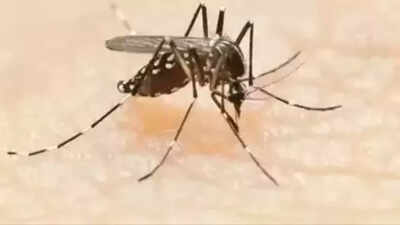
Image used for representative purpose only
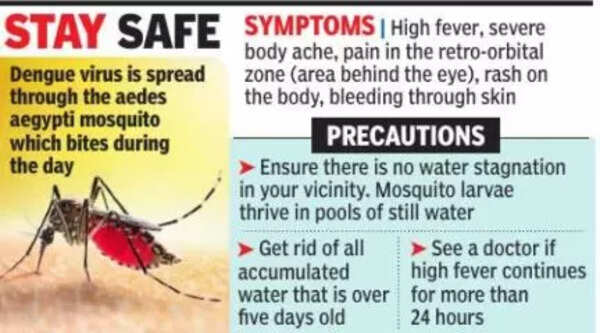
Dengue mosquitoes were found breeding in unused commodes, flowers pots, decorative plants kept in drawing rooms, containers or buckets left to collect water from air conditioners, and in some houses, even old refrigerators having a small container attached to collect water, had larvae, said Dr Kalpana Mahatme, health officer in-charge of national vector borne disease control programme in Goa.

While Goa reported fewer cases, 100 from January to July-end vis-a-vis the same period in 2022, Mahatme said, they are still worried with other states seeing a big rise in dengue cases. Majority of Goa’s workforce employed at fishing jetties, hospitality sector and construction sites, comes from other states.
The flow of labourers would rise post monsoon as construction and other businesses gain momentum. “With a delayed monsoon, we got extra time to up our preparedness, but we want people to check that there is no scope for mosquitoes breeding in the drawing rooms or elsewhere,” she said.
The health services, she said, has not staggered in taking source reduction drives. When a dengue case is reported, health workers visit the house or area, to detect dengue breeding if any, but they can’t be expected to inspect people toilets or mini gardens in their houses.
“In one flat, we uncovered larvae in the bottle that had a money plant growing, when we went there after dengue cases were reported from that house, ” she said.
In July last year, a total of 50 cases were found, last month 30 cases were detected, but the health services have not reduced its surveillance.
“We check fishing jetties where migrants are employed. At Cutbona jetty, we test 450-500 workers. Many have fever when they reach Goa, and test positive for dengue. Some dengue patients showing symptoms of worsening, need hospitalisation,” she said.
Mahatme said they have received help from civic bodies and zonal officers in conducting the drives.
Schools, she said, have also been instructed to appoint nodal officers to lookout for mosquito breeding in school premises, and prompt measures are taken. If a student reports sick and has a temperature, the school needs to inform the health centre in its area.
While the state had reported some cases of chikungunya last year, there’s been none so far, she said.

About the Author
Bindiya ChariEnd of Article
FOLLOW US ON SOCIAL MEDIA








Photostories

Hot Picks
TOP TRENDING
Popular Categories
Hot on the Web
Top Trends
Stock Market TodayBasit AliBrittany MahomesRavichandran AshwinBabar AzamKanpur Test Match RecordsUGC NET Result 2024Tirupati LadduIndia T20 WC SchedulePPF CalculatorBryonna Burrows Net WorthWomen T20 World Cup Points TableWomen T20 World Cup ScheduleIND vs PAK T20 WC MatchDiddyTop Management Colleges of IndiaLive Cricket Score
Trending Topics
GovindaNavratri Colours 2024Solar Eclipse 2024 TimesNavratri WishesGandhi Jayanti WishesDevara CollectionGOAT OTT ReleaseGandhi Jayanti 2024Rajinikanth Health UpdateNavratri HistoryDevaraGovinda NewsDevara Movie ReviewHealthy RaitasSwatantrya Veer SavarkarColdplay India tour 2025Upcoming Smartphones In OctoberAmazon SaleSony Bravia 55 inch 4k Ultra HD TVWordle Answer
Living and entertainment
Latest News
Zodiac Signs as Romantic Movie CouplesJapanese artist’s tribute to Indian classical dance formAnanya Panday unveils her Amol Palekar-inspired look in quirky BTS PICS from 'CTRL’Sanjay Dutt celebrates 'Gandhigiri', shares a scene from 'Lage Raho Munna Bhai'Women's T20 World Cup 2024: Teams, format, venues, defending champions and more FAQs answeredGovinda's bullet injury: Mumbai police not convinced with actor's version but rule out foul playGovt proposes to bring motorcycles under ‘contract carriage’ by amending MV ActHaircuts and colours to try out this PujoTriptii Dimri denies skipping the Jaipur event after allegations of charging an appearance feeMaharashtra assembly polls: Deputy CM Ajit Pawar meets Union home minster Amit Shah amid Mahayuti tensions over NCP, seat-sharingWatch: Orry channels Aishwarya Rai in a hilarious tribute to Shah Rukh Khan and Amitabh Bachchan starrer 'Mohabbatein'NFL insider reveals Raiders’ asking price for star wide receiver Davante Adams amid trade speculationFormer WWE Champion Jeff Hardy talks about “addiction struggles”Qualifier Yash upsets second seed Manish at Fenesta Open'Scam marathon' under JMM-Congress-RJD rule 'biggest obstacle' to Jharkhand's development: PM ModiWHO chief praises PM Modi on 10th anivarsary of Swachh Bharat missionNasa switches off instrument on Voyager 2 spacecraft to save powerBest Leather Wallets for Men in 2024: Timeless Elegance
Copyright © 2024 Bennett, Coleman & Co. Ltd. All rights reserved. For reprint rights: Times Syndication Service